Articles about transport | UserComp.com

Implementing WebTransport HTTP/2 Server using JavaScript/WebAssembly in Browser
This article provides a step-by-step guide on how to implement a WebTransport HTTP/2 server using JavaScript and WebAssembly in an isolated web app (IWA) browser. We'll successfully create an HTTP server using Direct Sockets TCP Server Socket.
Read More
Troubleshooting Transport Stream File Streaming using FFmpeg
Learn how to stream a Transport Stream (TS) file from one PC to another using FFmpeg without transcoding. This guide provides solutions for common issues and offers tips for clear playback on the destination PC using VLC.
Read More
Resolving GStreamerFFmpeg: MEDIA_ERR_DECODE
Experiencing MEDIA_ERR_DECODE while using GStreamer to receive RTP MPEG-2 Transport Stream, decode, re-encode H.264, and send UDP FFmpeg MPEG-DASH output? This article provides solutions to resolve this issue.
Read More
HTTP Protocol Requires Underlying Transport Protocol Connection-Based: An Explanation
This article provides an explanation of the HTTP protocol's requirement for an underlying transport protocol with connection-based behavior. It covers the concept of a connection-controlled transport layer and its fundamental scope in HTTP communication. For a comprehensive tech support resource, read more.
Read More
Adding Teletext Subtitles to a Container: A Tech Support Guide
Learn how to add teletext subtitles to a container using ffmpeg and transport stream files. Improve your video accessibility and enhance viewer experience. Read more for a step-by-step guide.
Read More
Transparently Recording Encrypted Multicast Transport Streams with FFmpeg
Learn how to record encrypted multicast Transport Streams transparently using FFmpeg and the NagraCAS decryption system.
Read More
Extracting Multifile Zip Archive on Linux (gunzip) for Windows Needed Transport on Limited Capacity Linux Server
Learn how to extract multifile zip archives using gunzip on a Linux server when dealing with limited capacity.
Read More
Configuring Edge Transport Server: Recommended Ports for Filtering Security
Learn about the recommended open ports for Microsoft Edge Transport Server to optimize filtering security. Place the Edge Transport Server in a DMZ or outside LAN.
Read More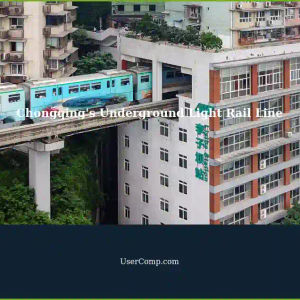
Building a Light Rail Line Inside a Residential Building in Chongqing: A Brilliant Solution to Urban Mobility Needs?
Built in the heart of Chongqing, a city nestled among mountains and rivers, the idea of constructing a light rail line inside a residential building seemed impossible. However, when engineers of Line 2 faced the challenge of extending the line and dividing it into stations, they came up with an innovative solution: integrating the line into the building itself. The result was an unusual yet fascinating addition, like the Liziba Station, nestled in the middle of a hill in the heart of a residential area. Instead of building separate casas topas with a literal railway line for a door, imagine the reality of having a metro line passing through the backyards of local residents every day. With Chongqing's complex geography and pressing mobility needs (the urban core has nearly 50 million inhabitants spread across all adjacent municipalities, and it has taken almost twenty years to address its transportation needs), the designers had to find a quick and effective solution. They responded by integrating the metro line into the building. The decision was deliberate, not an accident. The building was constructed with the metro station inside. A brilliant choice, given that all cities face the same challenges of livability and mobility. In some cases, the solutions for livability come first, while in others, mobility solutions take precedence. In this case, the metro line was built before the station appeared on top. A solution? Pass the metro line through the buildings. In just a few minutes, you can enjoy a time-lapse of the entire Line 2. Even the most famous Liziba Station, with the trend of disappearing into the grand toilet bowl-like structure, has other similar structures scattered around the mountain. Just like the train sets through buildings, the Line 2 was designed to work with natural stations. Another view, in this other case: More spectacular and unusual solutions to China's persistent mobility problems. In the last few decades, China has experienced unprecedented growth. Millions of people have moved from the countryside to cities, creating makeshift megapolises like Chongqing. This crisis has been solved with radical solutions, such as the metro-edifice.
Read More
Hyundai Unveils Hydrogen Fuel Cell Strategy Amid Lack of Support from Producers
Hyundai has presented its hydrogen fuel cell strategy, expressing confidence in the potential of hydrogen as a viable alternative to electric vehicles. Despite the minimal presence of hydrogen-powered vehicles in Europe, Hyundai believes that hydrogen has the potential to be used in various transportation applications. The company's strategy includes an integrated approach to the production, distribution, and consumption of hydrogen in vehicles. The main challenge, according to Hyundai, is that hydrogen vehicle manufacturers and hydrogen producers are not working together, creating a complicated transition to clean energy. Europe has proposed allocating 60.000 million euros before 2030 to create hydrogen refueling stations for light and heavy transport. However, the main challenge is the production and transportation of hydrogen. Hyundai is working on the development of polymer electrolyte membrane (PEM) electrolizers to produce cleaner hydrogen and is also considering the production of hydrogen from plastic waste. The company has not addressed the difficulties of transporting hydrogen, as it is highly flammable and volatile. Despite this, Hyundai is confident in the potential of hydrogen for transportation. In 2021, the company announced that all of its vehicles would have an alternative with a hydrogen fuel cell, but they have made it clear that they believe hydrogen has a much greater future beyond light transportation. In the United States, there are already 30 hydrogen-powered trucks in operation, each with a range of 400 kilometers thanks to a tank of 31 kg of hydrogen. In its presentation, Hyundai also discussed the potential of hydrogen in trams, special equipment, boats, advanced mobile generators, and even in aerial transportation. The company has announced that it will have one of these devices in 2028 and is currently the only manufacturer interested in using hydrogen for its aeronautical engines. Rolls-Royce has also confirmed that it is working on the development of hydrogen-powered aircraft, as they believe that electric planes will only be able to cover a limited range in the beginning.
Read More
Cost of Renting a 7-Seater Car in Ho Chi Minh City
Planning to rent a 7-seater car in Ho Chi Minh City? Learn about the average cost and factors affecting the price. Make an informed decision for your transportation needs in Vietnam.
Read More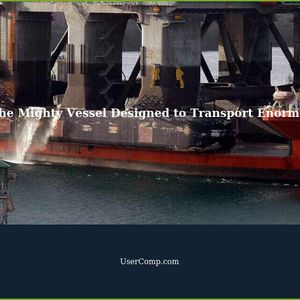
Blue Marlin: The Mighty Vessel Designed to Transport Enormous Structures
Discover the incredible capabilities of the Blue Marlin, a unique vessel designed to transport massive structures across the oceans. Learn how its innovative design allows it to securely carry heavy loads, such as the hull of the HMAS Adelaide, and explore its impressive specifications and operations. Join us on a journey to uncover the extraordinary world of heavy-lift maritime transport.
Read More