Articles about space exploration | UserComp.com
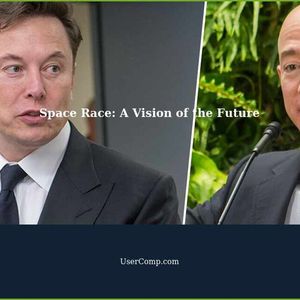
Elon Musk and Jeff Bezos' Space Race: A Vision of the Future
SpaceX and Blue Origin are competing for contracts with NASA and to be the first to launch a spacecraft to orbit. Both companies are also working to develop reusable rocket technology for space travel. Despite their professional rivalry, Elon Musk and Jeff Bezos are working towards a common goal: to make space travel accessible to the masses and to establish a sustainable presence on other planets. In a recent interview, Bezos revealed that he and Musk share the same vision for the future of humanity: a future where humans are a multiplanetary species. While the two companies have different approaches to achieving this goal, they are united in their pursuit of a common goal. The article explores the challenges and opportunities of space exploration, and how the rivalry between the two companies is driving innovation and progress in the field of space travel. It also looks at the potential impact of space exploration on the future of humanity and the role that private companies like SpaceX and Blue Origin will play in shaping this future.
Read More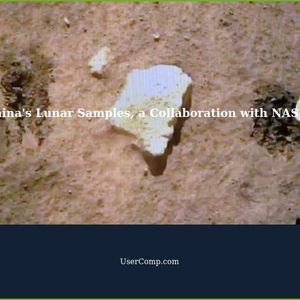
China's Lunar Samples, a Collaboration with NASA?
The relationship between the United States and China has changed drastically in the last decade, particularly in the commercial sphere. However, the scientific cooperation between the two countries has not developed significantly. The United States has prohibited the NASA from collaborating with China in space-related projects since 2011, and China has stopped signing a cooperation agreement in scientific and technological matters since 2018. The two countries' space agencies have been turning their backs on each other. However, the Chinese space agency is interested in the samples of the Chang'e 5 mission, which landed on the moon in 2020 and brought back samples of the lunar surface. The collaboration is a controversial issue, as the United States has imposed sanctions on China's space program. However, the NASA is open to collaborating with China until the end of 2021. The two countries have different opinions on the issue. The collaboration would be a diplomatic victory for China and a scientific victory for the NASA. The United States has a lot of samples from the Apollo missions to negotiate with, and China is interested in exchanging samples. The collaboration could open the door to a long-term partnership between the two countries. However, the United States is reluctant to remove the Wolf Amendment, which prohibits the NASA from collaborating with China without Congressional approval. The collaboration would be a significant step forward for space exploration, and it could lead to a technological revolution in the field.
Read More