Articles about spacex | UserComp.com

SpaceX's Falcon 9 Rocket B1058 Boosters Capsizes After Attempting 20th Flight
SpaceX's historic booster B1058 toppled over on the droneship during its transport back to the port after launching 43 Starlink satellites and completing 19 successful flights. The booster was expected to become the first SpaceX rocket to reach 20 flights. B1058 made its debut on May 30, 2020, during one of SpaceX's most important missions, launching astronauts Bob Behnken and Doug Hurley, the first crewed mission for the Crew Dragon spacecraft to the International Space Station. Since then, B1058 has broken multiple records, including becoming the first SpaceX booster to complete 14 successful flights. The Falcon 9 Block 5 is certified for 10 missions, but an in-depth evaluation of B1058 showed that it could fly at least 20 missions. Unlike the future Starship, the Falcon 9 is partially reusable, with SpaceX reusing the payload fairing (the cone-shaped part that protects the satellites) and the first stage (a propulsion system with nine engines capable of returning to the launch site and landing vertically). The more modern Falcon 9 boosters have improved landing legs that can compensate for crosswinds. However, this is not a common problem. Boosters B1060, B1061, and B1062 have flown 17 times and are ready to break B1058's record.
Read More
SpaceX to Install a 'Letter of Light' on Mars' Gateway
SpaceX, founded by Elon Musk in 2002, aims to colonize Mars. The ambitious plan requires at least a thousand Starships and two decades of work. Before starting SpaceX, Musk briefly joined the Mars Society, where he announced a project called Mars Oasis, which intended to install a small greenhouse on Mars to rekindle public interest in Mars exploration. Musk's goal has since evolved into transforming humanity into a multi-planetary species capable of surviving a catastrophe on Earth. In practical terms, it means creating the infrastructure for a self-sustaining human settlement on Mars. SpaceX has made significant progress, but the timeline remains optimistic. Musk plans to send a fleet of Starships, reusable spacecraft capable of carrying over 100 tons of cargo at minimal cost, to Mars to build a self-sufficient city. However, SpaceX still needs to demonstrate the first point, and Musk's optimism has raised questions about the feasibility of his plan.
Read More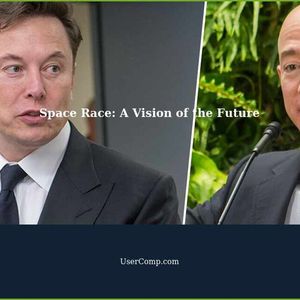
Elon Musk and Jeff Bezos' Space Race: A Vision of the Future
SpaceX and Blue Origin are competing for contracts with NASA and to be the first to launch a spacecraft to orbit. Both companies are also working to develop reusable rocket technology for space travel. Despite their professional rivalry, Elon Musk and Jeff Bezos are working towards a common goal: to make space travel accessible to the masses and to establish a sustainable presence on other planets. In a recent interview, Bezos revealed that he and Musk share the same vision for the future of humanity: a future where humans are a multiplanetary species. While the two companies have different approaches to achieving this goal, they are united in their pursuit of a common goal. The article explores the challenges and opportunities of space exploration, and how the rivalry between the two companies is driving innovation and progress in the field of space travel. It also looks at the potential impact of space exploration on the future of humanity and the role that private companies like SpaceX and Blue Origin will play in shaping this future.
Read More