Articles about astronomy | UserComp.com
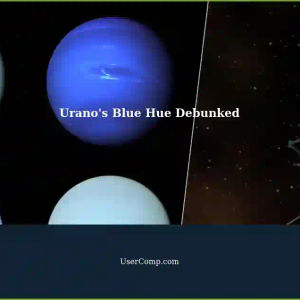
Urano's Blue Hue Debunked: A New Study
A recent study by a team of astronomers, including experts from the National Aerospace Technology Institute (INTA) and the University of the Basque Country (UPV/EHU), has challenged the long-held belief that Urano is intensely blue. The researchers analyzed images of Urano and Neptune, focusing on their color. The study reveals that Urano is not as intensely blue as previously thought, but rather a lighter blue-green color, similar to its neighbor Neptune. The color of Uranus changes over the course of a year, with the planet appearing greener during the solstices when one of its poles points towards the Sun. The researchers used data from various telescopes, including the Hubble Space Telescope and the VLT (Large Telescope) of the European Southern Observatory, to determine the true color of the planet. The study also highlights how these observations have helped refine the models that describe the atmospheres of these planets.
Read More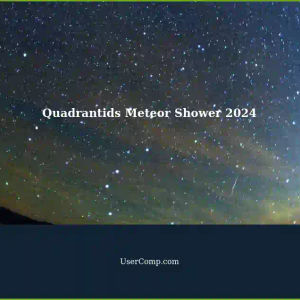
How to Observe the Quadrantids Meteor Shower in 2024
Get ready for the Quadrantids meteor shower, one of the three major meteor showers of the year, which will take place between December 28, 2023, and January 12, 2024, with the peak on January 3rd. The shower will be visible from anywhere in the Iberian Peninsula and the Balearic Islands, as well as in the Canary Islands. To see the meteors, look towards the constellation of Bootes, near the tail of the Big Dipper, with a clear and dark sky, away from light pollution. The best time to observe the shower in Spain will be in the early hours of January 4th. With up to 120 meteors per hour, it's an event not to be missed.
Read More
Finding Sun's Subpoints on Earth's Surface using Astropy
Learn how to use the Astropy Python module to find the latitude and longitude of the sun and its subpoints directly overhead the Earth's surface. This technique can be useful for astronomical observations and calculations.
Read More