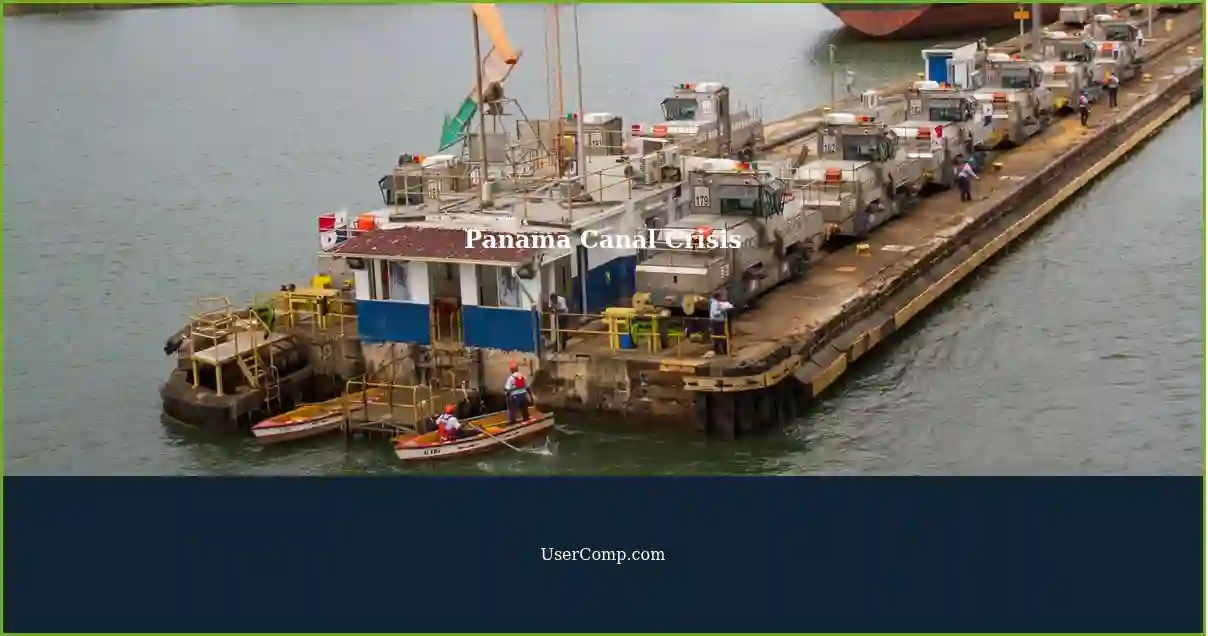
In response to this dire situation, Panamanian authorities are contemplating extreme solutions, such as artificially seeding clouds to produce rain. The canal, which connects the Atlantic and Pacific Oceans, requires a large quantity of water to function, with 193 million liters needed for each of the thousands of annual transits. However, in the past five years, the region has experienced a 20% reduction in rainfall, causing the lakes that supply water to the canal to reach historic low levels (1.8 meters below normal). Lake Gatún, the largest of the lakes that provide water to the canal, reached its lowest historical level in July.
The emergency solution implemented was to reduce the number of vessels crossing and limiting the draft of the ships. This maritime chaos has led to a bottleneck where more than 100 ships wait, causing weeks of delay and costing companies millions of dollars. Some shippers have even offered to pay exorbitant fees to bypass the line, with one anonymous transportist paying $2.4 million in a bid organized by the same authorities. Others have opted for longer, more expensive routes through Africa and South America.
However, the crisis continues, and the rainfall levels are not enough to sustain the lake levels during dry seasons. Authorities have decided to release water from a secondary reservoir, Lake Alajuela, as a short-term solution. In the long term, the plan is to build a tunnel through a mountain to channel fresh water 8 kilometers to the main reservoir. This project, which will cost an estimated $2 billion and take at least five years to complete, is just the beginning. The country will also need to dam additional rivers to guarantee water supply until the end of the century.
The approval of Congress is required, while thousands of farmers and ranchers whose lands will be flooded to build the reservoir are organizing protests. In the long term, the Panama Canal Authority is studying possible alternatives, some of which are more experimental, such as an artificial lake to pump water to the canal or cloud seeding to increase rainfall.
As Erick Córdoba, head of the water division at the Panama Canal Authority, said in a Bloomberg interview, "As a canal, as a country, we need to take some measures because it's unacceptable. We need to recalibrate the system." Indeed, a small plane operated by Weather Modification Inc. recently arrived in Panama to test cloud seeding, a practice that has been successful in many dry, desert regions but not in tropical countries like Panama.
The trend is clear: many countries are experimenting with this technology. Saudi Arabia initiated a major initiative last year, and six countries in the Middle East and North Africa are applying it. China has the most ambitious program in the world, aiming to stimulate rainfall over the Yangtze River, which is also losing a significant amount of water each year. Even the United States has implemented similar programs in drought-affected states like Idaho and Wyoming. As the years pass, this solution will become increasingly common, despite its evident consequences. Panama will prioritize what is most important.