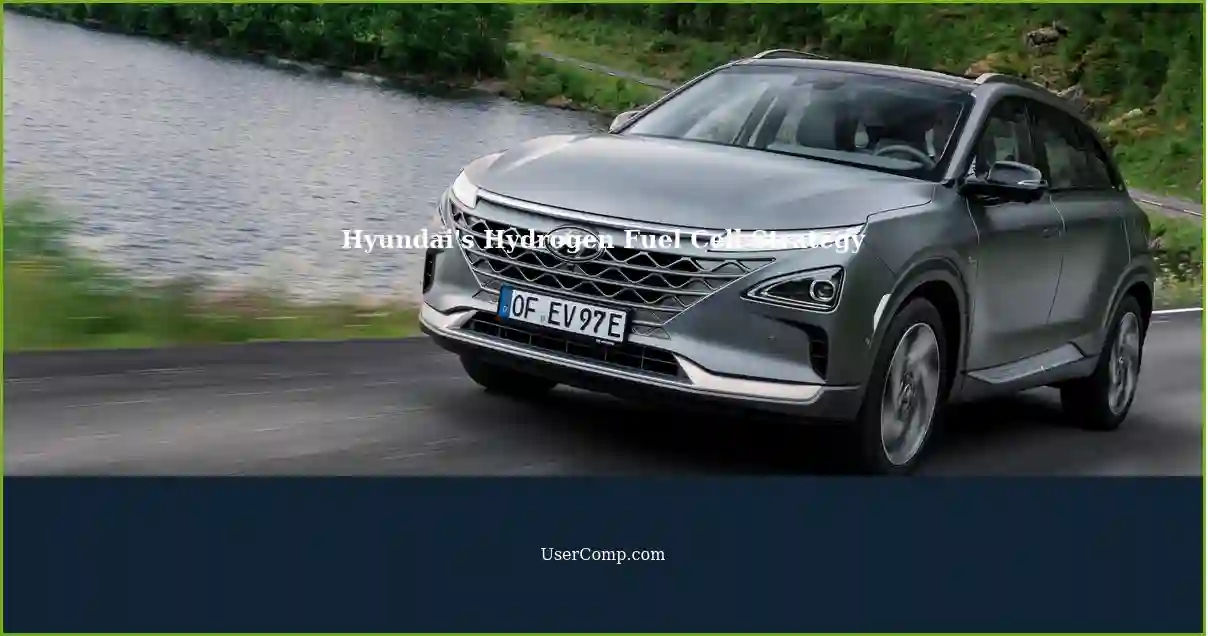
Toyota is not the only company that has presented its hydrogen roadmap. Hyundai has also revealed its plans, which were unveiled at the CES in Las Vegas. The South Korean company trusts in the growth of hydrogen, not only for road vehicles but also for other types of transportation.
Hyundai believes that hydrogen is just as interesting, if not more so, for other types of applications. During their presentation, the South Koreans assured that their bet is comprehensive, an offensive at all levels of hydrogen production, distribution, and use in vehicles.
A key issue, according to Hyundai, is that vehicle manufacturers who are moving towards hydrogen power are not the same as those producing the hydrogen itself. This has created a complicated process in the energy transition. Europe has proposed to support hydrogen as a fuel for transportation, with a plan to dedicate 60.000 million euros before 2030 to the creation of hydrogen refueling stations that can supply light and heavy vehicles. Currently, there are around 100 of these stations in Germany and France, with more countries expected to follow suit.
The main problem with hydrogen is its production and transportation. Hyundai is already working on this, assuring that they are making progress. First, with the development of polymer electrolyte membrane (PEM) electrolyzers, which can produce hydrogen with a higher purity level, making it ideal for clean mobility. These electrolyzers are currently sensitive to impurities, but Hyundai is confident in their progressive cost reduction. The strategy also includes the production of hydrogen through the transformation of plastic waste.
However, Hyundai has not addressed the difficulties of transporting hydrogen. Like gas, hydrogen is highly volatile and flammable. One option is to liquefy it, but this requires transporting it at temperatures below -253°C. Despite this, Hyundai is confident in hydrogen as a tool for cleaning up their vehicle fleet. In 2021, the company assured that all of their cars would have an alternative with a fuel cell, but they clarified that they believe hydrogen has a lot more potential beyond just light transportation.
In the United States, 30 trucks that use fuel cells are already in operation, covering 400 kilometers of travel with a 31kg hydrogen tank. These trucks can be refueled in just 8-20 minutes. In addition, during their presentation, Hyundai spoke about the potential of hydrogen in "trams, special vehicles, boats, advanced mobile and aerial energy generators." This is especially interesting as Hyundai is particularly interested in the development of VTOLs, which promise urban air mobility within reach of anyone. In fact, they have said that they will have one of these devices in 2028, and they are currently the only manufacturer interested in using hydrogen for their aircraft.
Rolls-Royce has confirmed that they are working on the development of electric aircraft in favor of hydrogen engines, as they believe that the first models will only be able to cover a few kilometers. The transportation of hydrogen is indeed a challenge, but Hyundai is confident that it can be overcome, and they are not alone in this belief.
The transportation of hydrogen is indeed a challenge, but Hyundai is confident that it can be overcome, and they are not alone in this belief. Hydrogen-powered transportation is one of the great challenges of the future, and Hyundai is determined to be at the forefront of this new technology.