The International Space Station (ISS), a laboratory that orbits the Earth at 400 km above sea level and cost 150 billion dollars to build, is within reach of many. In reality, anyone can communicate with the ISS with a ham radio and some patience. As a recent story showed, an Argentine radio taxi driver made contact with the ISS during a spacewalk to confirm a direction by asking, "150, did you say, from Irigoyen?".
Doug, a ham radio operator, is the protagonist of our latest tale. He managed to speak with a NASA astronaut from his backyard. In one of his recent videos, Doug recounts how he contacted astronaut Woody Hoburg after several attempts as the ISS flew over his city. Doug wrote, "I made numerous contacts through the FM repeater on the ISS, but if you want to speak with an astronaut, it's a different story." He continues, "Finally, during the week of Memorial Day, I succeeded. I contacted the ISS and spoke with Woody Hoburg. What an emotion!"
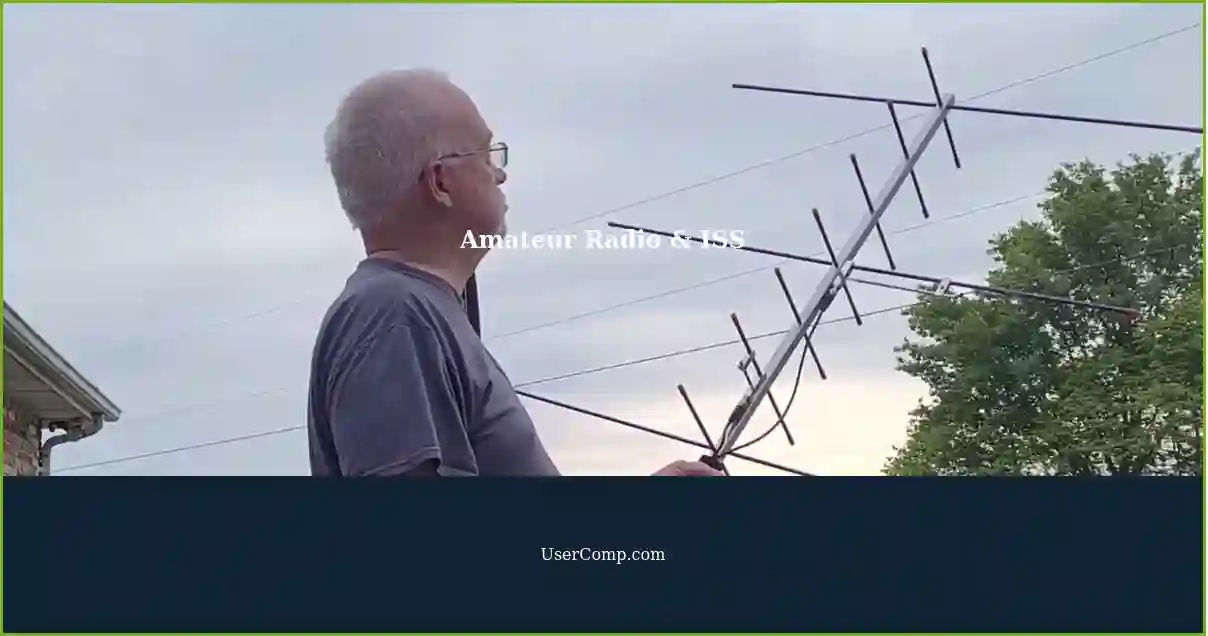
In the video, Doug (known as KB8M) points his antenna at the sky and repeats the ISS's distinct call sign, NA1SS, several times. Suddenly, a man answers, "Kilo-Bravo-8-Mike. This is NA1SS. You're loud and clear. Welcome aboard." With a half-frozen smile on his face, Doug shows off his modest setup that he used to speak with the ISS: an antenna similar to a television antenna, a VHF/UHF dual-band transceiver radio amateur model FT-60ARISS, and the PROGRAM OF RADIO AMATEURS OF THE INTERNATIONAL SPACE STATION.
Most astronauts and cosmonauts on the ISS have an amateur radio license. There is a radio station on board that the astronauts use to speak with schools for scheduled activities, and sometimes during their free time to contact other ham radio operators. The first amateur radio transmission from space was before the existence of the ISS. In 1983, astronaut Owen Garriott, a licensed radio amateur, used the transceiver of the space shuttle Columbia to chat with his dad in Oklahoma. Garriott's companion, astronaut Tony England, pushed NASA to allow amateur radio equipment on space shuttle flights to encourage young people to take an interest in engineering.
As a result, volunteers from various countries created an organization called ARISS (Amateur Radio International Space Station) that arranges contacts between radio amateurs and astronauts on the ISS. These contacts are usually prepared in schools so that students can ask astronauts questions. The questions are rapid-fire. Even if a significant setup is not required to speak with the ISS, the ISS must be in view, an astronaut must be available during their free time and be near the radio. Astronauts usually announce on social media when they will be talking on the radio so that ham radio operators do not waste time. However, patience is key.