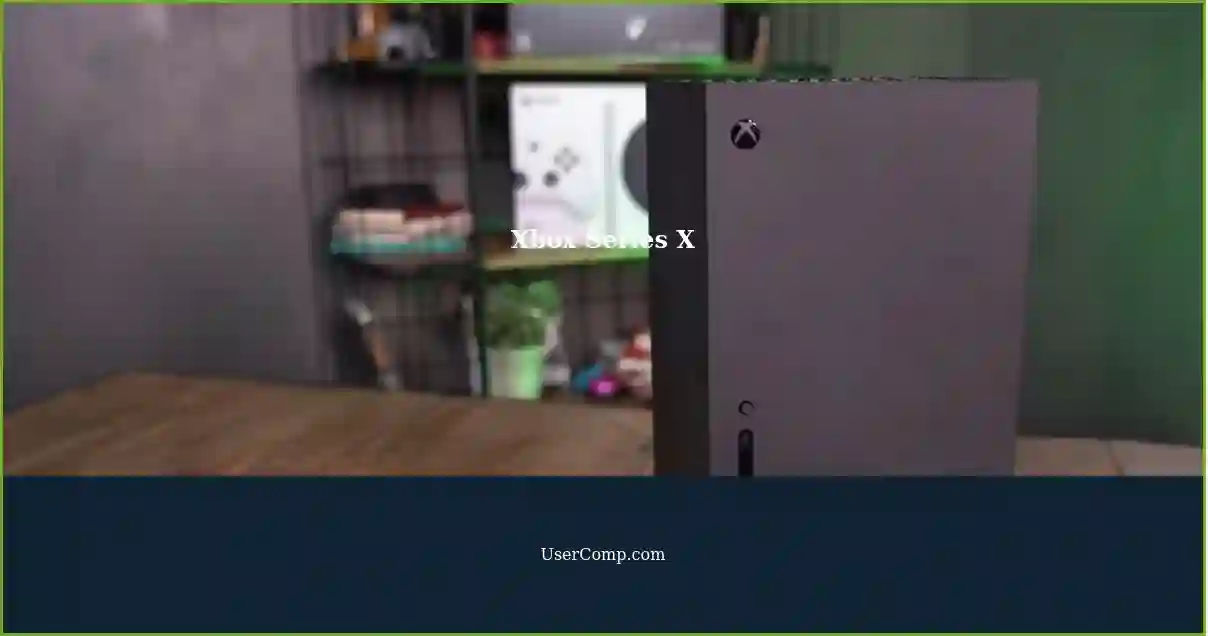
Over the past few months, the Xbox division of Microsoft has been making significant strides. The section that was once plagued with skepticism and criticism, following the launch of Xbox One in 2013, has been systematically designed to make gaming more accessible to players. Under the leadership of Phil Spencer, as opposed to the less-than-accurate guidance of Don Mattrick, Xbox has been working towards establishing a formidable ecosystem that aims to make Sony's journey more challenging than ever before.
The upcoming months will reveal how the players respond to both the PlayStation 5 and the most ambitious console from Microsoft. However, objectively, Xbox Series X has already won several battles before its release. The war is yet to be fought, but Xbox Series X is intimidating, and it will be fascinating to see how it performs in the real world.
XBOX SERIES X: SPECIFICATIONS
The heart of the Xbox Series X console is the chip that brings together the CPU and the graphics processor in a single circuit. This System on a Chip (SoC) is built using extreme ultraviolet lithography (EUV) of 7nm and implements Zen2 microarchitecture for the CPU and RDNA2 for the graphics processor. Microsoft has confirmed that the brains of its new consoles have been modified with the help of its engineers, enhancing the performance of the Ryzen 3000 series processors and the Radeon RX 6000 series graphics cards.
The SoC of Xbox Series X is built using EUV of 7nm, implementing Zen2 microarchitecture for the CPU and RDNA2 for the graphics processor. The console features 16GB of GDDR6 memory, which communicates with the SoC via a 320-bit bus. However, not all of this memory works under the same conditions. 10GB of it operates with a bandwidth of 560GB/s, while the remaining 6GB communicates with the other components of the system at a rate of 336GB/s.
The APU, or the memory that powers the main console, has been dimensioned with a clear objective: to handle the rendering of 2160p games while keeping the cost under control, preventing the console's price from skyrocketing.
Another critical component of the Xbox Series X architecture is the solid-state drive (SSD) responsible for secondary storage. The new machines from Microsoft, like the PlayStation 5, replace the clearly outdated mechanical hard drives that their predecessors relied on with SSDs capable of achieving much higher speeds, much more in line with the needs of a gaming machine.
The SSD in Xbox Series X has a capacity of 1TB, but, as you can see in the following capture, the usable space for installing games and other applications is reduced to 802GB. Similar to Xbox One X, Xbox Series X also includes an optical drive capable of reading Blu-ray 4K discs and playing Blu-ray 4K movies. However, what might not be getting the attention it deserves is the implementation of Microsoft's proprietary Triton technology, which simulates sound propagation with remarkable precision, making the interaction between sound and objects in the environment much more realistic.
The Xbox Series X also features HDMI 2.1 output, which is necessary to transport 4K UHD frames at a rate of up to 120FPS, three USB 3.1 Gen 1 ports, a Gigabit Ethernet port, and a proprietary slot for Seagate expansion cards with a capacity of 1TB, which will cost $249.
In the table below, you can find the specifications of Xbox Series X, but we have also included Xbox Series S, Xbox One X, PlayStation 5, and PlayStation 4 Pro for comparison.
| | Xbox Series X | Xbox Series S | Xbox One X | PlayStation 5 | PlayStation 4 Pro | | --- | --- | --- | --- | --- | --- | | CPU | Zen 2 8-core 3.8GHz | Zen 2 8-core 3.6GHz | Jaguar 8-core 2.13GHz (variable) | Zen 2 8-core 3.5GHz (variable) | Jaguar 8-core 2.13GHz (variable) | | GPU | RDNA 2 52 CUs 1.825GHz | RDNA 2 20 CUs 1.565GHz | Polaris 30 36 CUs 1.172GHz | RDNA 2 36 CUs 2.23GHz (variable) | Polaris 20 36 CUs 911MHz | | MEMORY | 16GB GDDR6 with 320-bit bus | 10GB GDDR6 with 128-bit bus | 12GB GDDR5 with 256-bit bus | 16GB GDDR6 with 256-bit bus | 8GB GDDR5 with 256-bit bus + 1GB GDDR3 | | MEMORY BANDWIDTH | 10GB 560GB/s, 6GB 336GB/s | 4GB 224GB/s, 6GB 56GB/s | 8GB 224GB/s | 12GB 448GB/s | 8GB 217.6GB/s | | STORAGE | 1TB Custom NVMe SSD | 512GB Custom NVMe SSD | 1TB HDD | 825GB Custom NVMe SSD | 1TB HDD | | OPTIcal DRIVE | 4K UHD Blu-Ray | None | 4K UHD Blu-Ray | 4K UHD Blu-Ray | Blu-Ray | | SOUND | Dolby Digital 5.1, DTS 5.1, Dolby TrueHD with Atmos, LPCM up to 7.1 channels | Tempest 3D audio engine | Dolby Digital 5.1, DTS 5.1, Dolby TrueHD with Atmos, LPCM up to 7.1 channels | Tempest 3D audio engine | Dolby Digital 5.1, DTS 5.1, LPCM up to 7.1 channels | | CONNECTIVITY | HDMI 2.1, 3x USB 3.1 Gen 1, 1x Gigabit Ethernet, 1x proprietary expansion slot | HDMI 2.1, 3x USB 3.1 Gen 1, 1x Gigabit Ethernet | HDMI 2.0b (output), 1x HDMI 1.4b (input), 3x USB 3.0, 1x S/PDIF, 1x infrared output | HDMI 2.1, 2x USB 3.1, 1x USB 2.0, 1x USB-C, 1x Gigabit Ethernet | HDMI 2.0b, 3x USB 3.1 Gen 1, 1x auxiliary connector, 1x optical digital output | | CONNECTIVITY (Wi-Fi) | Wi-Fi 802.11ac, dual-band for accessories | Wi-Fi 802.11ac, dual-band for accessories | Wi-Fi 802.11ac, dual-band for accessories | Wi-Fi 6, Bluetooth 5.1 | Wi-Fi 802.11ac, Bluetooth 4.0 | | DIMENSIONS | 151x151x301mm, 4.44kg | 151x151x65mm, 1.92kg | 300x240x60mm, 3.8kg | 390x104x260mm, 4.5kg | 295x55x327mm, 3.3kg | | PRICE | $499.90 | $299.90 | $434.99 | $499.90 | $409.99 |
XBOX SERIES X: DESIGN
The largest of the two proposals from Microsoft for the new generation, Xbox Series X, stands out for its robust and compact design. Its 30 centimeters in height, 15 centimeters in width, and 30 centimeters in depth give it a unique and recognizable style, consistent with the previous ones, but with a more sober touch. The solid and stable bases allow the console to be placed in various positions, making it easier to find a suitable space near the TV. The console's weight of 4 kilograms also provides stability and makes it easy to handle.
The interior of the console has left behind the transformers of old, providing a more stable temperature and noise level. The temperature and noise levels are minimal, almost imperceptible, and the cooling system is efficient, preventing the console from overheating. The esthetics of the Xbox One were criticized, but the design of Xbox Series X is elegant, with a touch of calmness that is enhanced by the uniform color of the ventilation zone.
The front panel of the console is almost completely transparent, allowing the Blu-ray reader, USB port, and the power button with the Xbox logo to be visible. The connectors are located on the back panel, with the exception of the USB port on the front panel. The HDMI output implements the 2.1 standard, and the power supply is integrated into the console. The expansion slot for Seagate's 1TB cards is located at the bottom of the console, and it is hoped that its price will decrease significantly.
The Xbox Series X feels just as comfortable in vertical as in horizontal orientation. The stability is not compromised in either position, and the cooling system works efficiently. However, the preferred orientation is vertical due to the console's unusual proportions when it is placed horizontally.
The holes around the circular opening on the console's top are not decorative but have a crucial role: they allow air to enter the console's interior, cooling the components that dissipate heat, such as the SoC, memory chips, the E/S controller, and the NAND flash memory that forms the SSD.
THE FIRST CHALLENGE: HEAT DISSIPATION
Like Xbox One X, Xbox Series X uses a vapor chamber to ensure that the SoC does not exceed its maximum temperature limit, even under heavy loads. This solution also helps maintain a low noise level by working with a fan that can move a large volume of air without having to run at high speeds.
One of the most ingenious solutions that Microsoft's engineers have implemented in Xbox Series X is the division of the base plate into two compact printed circuit boards (PCBs) attached to a heat sink located perpendicular to the fan's rotation axis. This design allows the airflow to pass through the PCBs without any obstacles, optimizing heat dissipation from the components that dissipate the most heat.
To measure the temperature distribution on the console, we scanned the entire surface using a digital infrared thermometer. The measurements were taken in two different scenarios: under low load (with the console turned on, but without running any games or applications) and under high load (with the console running a demanding game with the goal of stressing the hardware).
During our tests, we used a fan with a wide range of games, but the measurements were taken with DiRT 5 on Xbox Series X, Gears 5 on Xbox One X, and Last Us II on PlayStation 4 Pro. To limit the scope of each measurement, we divided the console's surface into several sections. The left column of the table below shows the maximum temperature reached in low load for each section, and the right column shows the maximum temperature reached in high load for each section.
| SECTION 1 (LATERAL MIDDLE LOWER RIGHT) | 22.8°C / 25.3°C | 26.5°C / 28.3°C | | --- | --- | --- | | SECTION 2 (LATERAL MIDDLE LOWER LEFT) | 21.7°C / 22.2°C | 23.6°C / 25.2°C | | SECTION 3 (FRONT MIDDLE LOWER) | 26.8°C / 37.9°C | 27.9°C / 28.3°C | | SECTION 4 (FRONT MIDDLE UPPER) | 28.4°C / 45.5°C | 33.3°C / 37.9°C | | SECTION 5 (LATERAL MIDDLE UPPER RIGHT) | 26.9°C / 40.4°C | 34.9°C / 39.7°C | | SECTION 6 (LATERAL MIDDLE UPPER LEFT) | 27.4°C / 36.4°C | 51.4°C / 60.7°C | | SECTION 7 (TOP) | 34.8°C / 59.1°C | 32°C / 33.4°C | | SECTION 8 (BACK) | No / 38.3°C / 63.2°C | No / 38.6°C / 63.7°C |
As you can see, the temperature distribution is not uniform, and the upper part of the console is significantly warmer than the lower part. This is due to the fact that the air temperature inside the console increases as it absorbs heat from the components, creating a gradient from the bottom to the top.
However, it is important to note that the maximum temperature reached during our tests, 60.7°C, is still within the safe operating range of the components, and it is consistent with the temperature range of other high-performance consoles.
THE SECOND CHALLENGE: NOISE
Many users are concerned about the noise level of the console under stress and the effectiveness of its cooling system. To address this concern, we measured the noise level generated by Xbox Series X in the same scenarios as before: under low load and under high load.
Under low load, the console generates 38.8 decibels, which is slightly higher than the noise level of a quiet conversation. Under high load, the noise level increases to 42.3 decibels, which is still relatively low and should not be a problem for most users.
For comparison, the PlayStation 4 Pro generates 59 decibels under high load, which is a much higher noise level that can be distracting and unpleasant.
THE THIRD CHALLENGE: POWER CONSUMPTION AND STARTUP TIME
The third challenge that we have put Xbox Series X through is measuring its power consumption and startup time.
Under low load, the console consumes 58.2 watts, and under high load, it consumes 200.8 watts. This is a significant improvement compared to Xbox One X, which consumes 72.3 watts under low load and 191.7 watts under high load.
The startup time of Xbox Series X is also impressive. It takes only 20 seconds to start up and display the initial screen, which is faster than Xbox One X and PlayStation 4 Pro.