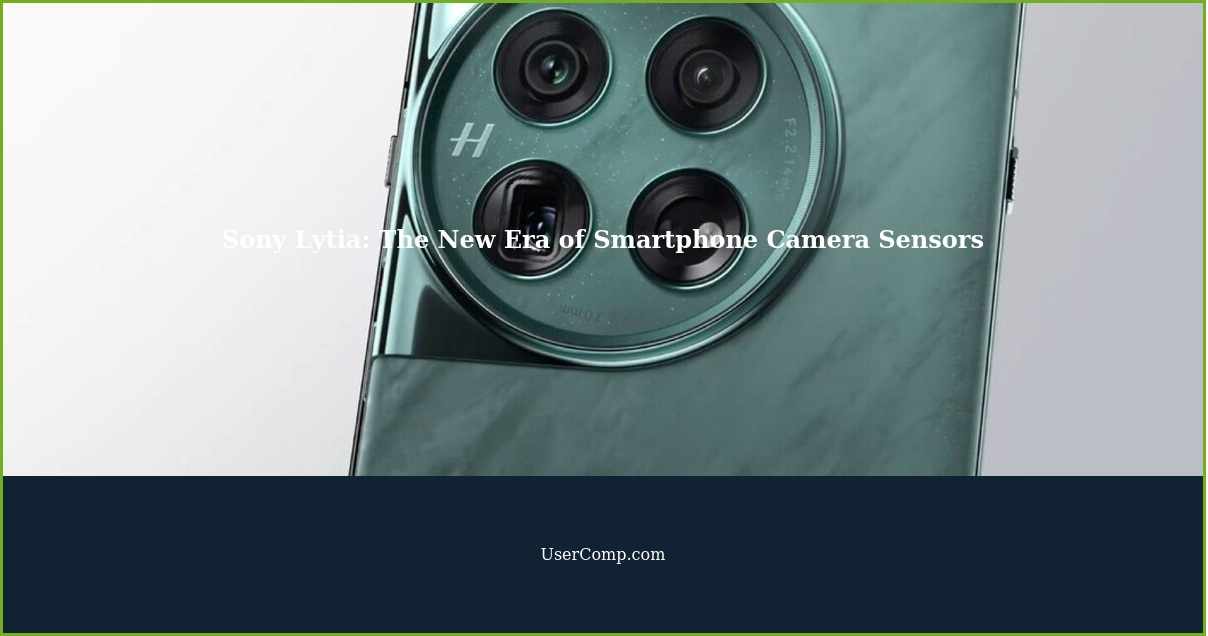
Sony Lytia: The Future of Mobile Photography
Sony Lytia, or Sony Lyt, is a name you should remember because in 2024 you will be hearing it in a large part of the high-end (and possibly mid-range) smartphone market. Until now, Sony IMX sensors have been the kings of mobile photography sensors, being the go-to choice for practically any type of smartphone. However, in the second half of 2023, Sony introduced an even more interesting weapon: the Lytia sensors.
Lytia is Sony's new sub-brand for image sensors, and they have announced a whole family of 50-megapixel hardware designed for different smartphone ranges. The first one to hit the market is the Sony LYT800, the powerful camera sensor that was tested in the OnePlus Open event (with impeccable results) and will also be featured in the OnePlus 12 and Realme GT5 Pro smartphones. Next year, we can expect the Sony Lytia 900 series, so let's take a closer look at all the sensors in this family to give you a complete picture of what's to come.
Sony Lytia Sensor Models
| Model | Technical Specifications | Description |
|---|---|---|
| LYT900 | Approximately 10.98" (16.384 mm diagonal) | High-end LYTIA model designed for premium smartphone images. |
| LYT800 | Approximately 1/1.43" (11.2 mm diagonal) | Premium model that rivals 1" type sensors. It is the first sensor with a 2-layer transistor pixel structure that promises excellent saturation signal levels. |
| LYT700 | Approximately 1/1.56" (10.24 mm diagonal) | Retains high-end features such as multiple high dynamic range (HDR) methods. Designed for 1/1.5" type sensors. |
| LYT600 | Approximately 1/1.953" (8.192 mm diagonal) | Oriented towards the popular segment. Equipped with high-end features such as all-pixel autofocus. Designed for 1/2" type sensors. |
| LYT500 | Approximately 1/2.93" (6.144 mm diagonal) | New standard front camera sensor model optimized for 1/2.9" selfies with small 0.6 µm pixels that promise high image quality. |
The most eye-catching sensor is the LYT900, which is a one-inch sensor. Sony has previously created sensors of this size, but the new features of the Lytia series are more than interesting. These stacked sensors improve almost everything, starting from how the image signal is processed.
The HDR processing starts directly on the sensor, eliminating the need for post-processing by the manufacturer (although each manufacturer will interpret HDR as they see fit). The sensor is capable of capturing up to three images with different brightness levels thanks to different shutter speeds, offering an output with a wider dynamic range that the manufacturer can further process.
There are also improvements in the focusing mechanism. Normally, when we talk about autofocus, we refer to phase detection autofocus (PDAF), which means that a portion of the pixels on the sensor are used for detection. In current high-end smartphones, 100% of the pixels can be used for focusing. Lytia sensors use 100% focus pixels, mainly targeting moving objects and low-light scenes where focusing is usually more challenging.
The sensor structure is also different. We are talking about stacked sensors. Unlike conventional back-illuminated sensors, these sensors make it possible to create "large-scale" chips in much smaller sizes. This architecture simplifies the collection of information by the sensor, making them more efficient in the same size.
As you can see in the table, there are several members in this family. The LYT800 is already available, and the LYT900 is expected to be featured in high-end models next year. It is also expected that mid-range smartphones will benefit from these sensors, although the final image processing will depend on the philosophy of each manufacturer.
The Sony Lytia sensors are set to revolutionize the mobile photography industry. With their advanced features, such as in-sensor HDR processing, improved autofocus, and stacked sensor architecture, these sensors promise to deliver exceptional image quality and performance. Whether you are a photography enthusiast or an average smartphone user, the Sony Lytia sensors are definitely something to look forward to in the upcoming smartphone releases. Keep an eye out for the Sony Lytia branding, as it is expected to become a prominent name in the high-end and mid-range smartphone market in the coming years.
Disclaimer: The above article is based on speculation and information available at the time of writing. The actual features and capabilities of the Sony Lytia sensors may vary in the final product.